+62 817-4929-054


An Introduction to SIS: Electromagnetic Therapy Technology to Support the Rehabilitation Process
23 September 2026
3 min read


By: dr. Natalia Loekito, Sp.KFR
Rehabilitation plays a crucial role in the recovery process following injuries, muscle disorders, pain, or specific neurological conditions, helping patients return to optimal activity levels. With advancements in medical and physiotherapy technology, various therapeutic modalities are now available to support rehabilitation, one of which is the Super Inductive System (SIS).
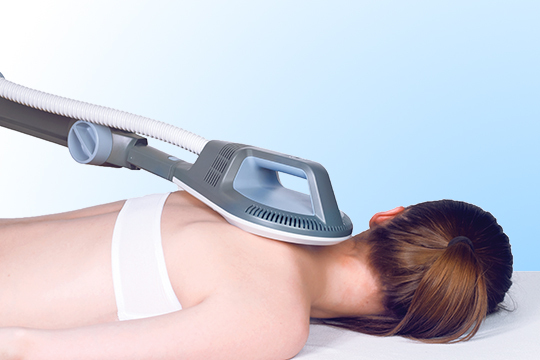
SIS is a therapy based on a high-intensity electromagnetic field—reaching up to 2.5 Tesla—that allows energy to penetrate tissues to a depth of approximately 10 cm. This technology can be used to stimulate tissues such as muscles and nerves, as well as areas surrounding the joints.
Unlike some therapeutic modalities that utilize electrodes, SIS operates without direct skin contact; consequently, patients do not require electrodes to be attached to their bodies during treatment. In certain situations, the therapy can even be administered to patients wearing casts for fractures, subject, of course, to the evaluation and judgment of medical professionals.
Non-Contact Therapy with Adjustable Frequency Options
A key advantage of SIS is the ability to adjust the therapy frequency—ranging from 1 to 150 Hz—to suit the patient's specific goals and needs. These settings can be utilized across various therapy programs, including pain management and muscle stimulation.
SIS also features a "six-joint arm"—a flexible applicator arm that allows medical professionals to direct the therapy to various parts of the body. This flexibility facilitates access to specific areas that may be difficult to treat with other therapeutic modalities.
Supporting Pain Management
Pain is a frequently encountered issue during the rehabilitation process. SIS serves as a therapeutic modality capable of helping manage various types of pain, ranging from acute and subacute to chronic conditions.
This therapy can be incorporated into treatment programs for conditions such as osteoarthritis, impingement syndrome, carpal tunnel syndrome (CTS), herniated nucleus pulposus (HNP), and muscle strains.
However, the use of SIS must be tailored to each patient's diagnosis and condition. It is not a standalone treatment but rather part of a more comprehensive rehabilitation program.
Aids in Muscle Stimulation and Strengthening
In addition to pain management, SIS can be utilized for myostimulation, or muscle stimulation.
This stimulation helps support muscle strengthening, prevent muscle atrophy, and promote muscle relaxation, while also alleviating issues associated with muscle spasms.
In specific cases, stimulation can be directed at the diaphragm to support lung functional capacity or at the abdominal muscles to assist with coughing ability. Its application is, of course, tailored to the patient's specific condition and needs.
Supports Recovery in Movement and Neurological Disorders
SIS can also be employed as part of a rehabilitation program to help improve movement function.
Repetitive muscle contractions around a joint can facilitate mobilization and the restoration of joint play. The therapy can also be combined with physical exercises prescribed by a physician or physiotherapist.
For certain neurological conditions, such as stroke and cerebral palsy, SIS serves as a rehabilitation modality to help reduce spasticity and assist in regulating muscle tone.
What Effects Do Patients Experience?
Some patients may notice the effects of the therapy immediately after a session. A key study reported that approximately 62% of patients experienced effects that were perceptible right after treatment.
However, individual responses to the therapy can vary. Outcomes may be influenced by the patient's condition, diagnosis, the severity of the issue, and the specific combination of therapies and exercises administered.
Therefore, successful rehabilitation relies not on a single therapeutic modality, but on a rehabilitation program tailored to each patient's specific needs.
Not All Patients Are Suitable for SIS Therapy
Despite its various benefits in rehabilitation, SIS is not suitable for every patient. Certain conditions—such as the use of a pacemaker or specific medical implants, pregnancy, certain types of cancer, and the presence of active growth plates—must be taken into account before treatment begins.
Acute conditions or fever also require prior evaluation.
Consequently, before undergoing SIS therapy, patients must consult with a doctor or medical professional to ensure the treatment is safe and appropriate for their specific condition.
Technology Supporting the Recovery Journey
Technological advancements in rehabilitation offer patients an increasing range of options to support their recovery process. Utilizing high-intensity electromagnetic field technology, non-contact therapy, and various application options, SIS serves as a modality that supports pain management, muscle stimulation, and the restoration of movement function.
However, every patient has unique conditions and needs. If you are experiencing pain, movement disorders, or muscle weakness, or are recovering from an injury or specific medical condition, please consult a doctor or physiotherapist to determine the most suitable therapy options.
Optimal recovery begins with an accurate diagnosis and an appropriate rehabilitation program.
Contact us
For information and make an appointment

| Loading data... |
|---|