+62 817-4929-054


Developments in the Management of Heart Rhythm Disorders: Understanding Atrial Fibrillation, a Heart Rhythm Disorder That Can Increase the Risk of Stroke
22 October 2026
4 min read


By: dr. Beny Hartono, Sp. J.P, Subsp. K.I. (K), FIHA
The heart has an electrical system that ensures it beats in a regular rhythm. When this system is disrupted, the heart rhythm can become too fast, too slow, or irregular. One such heart rhythm disorder that warrants attention is atrial fibrillation (AF).
Atrial fibrillation does not always present with clear symptoms. Some individuals may only experience heart palpitations, fatigue, or shortness of breath. However, this condition should not be ignored, as it can increase the risk of blood clot formation, which may potentially lead to a stroke.
What Is Atrial Fibrillation?
Atrial fibrillation is a heart rhythm disorder in which the electrical activity in the atria—the upper chambers of the heart—becomes rapid and irregular. As a result, the atria fail to contract in a coordinated manner as they should.
This condition causes an irregular heartbeat and affects the efficiency of blood flow within the heart.
Atrial fibrillation can occur in people of various age groups, though the risk increases with age.
This disorder is also a significant concern because its impact extends beyond symptoms like heart palpitations; it is also associated with an increased risk of stroke, heart failure, and a reduced quality of life.
Why Can Atrial Fibrillation Cause a Stroke?
One of the most serious complications of atrial fibrillation is a stroke resulting from a blockage in the blood vessels of the brain.
Under normal conditions, the atria (upper chambers of the heart) contract in a regular, coordinated manner to help pump blood into the ventricles (lower chambers). In atrial fibrillation, these atrial contractions become ineffective, causing blood flow to slow down in certain areas—particularly within a section of the left atrium known as the left atrial appendage.
When blood flow slows, the likelihood of blood clots forming increases. If a portion of such a clot breaks away and travels through the bloodstream until it blocks a blood vessel in the brain, an ischemic stroke can occur.
For this reason, the management of atrial fibrillation is not limited to controlling the heart rate; it also involves assessing and reducing the risk of stroke.
A physician will evaluate each patient’s individual risk to determine whether blood-thinning medication or other stroke-prevention strategies are necessary.
Recognizing the Symptoms of Atrial Fibrillation
Symptoms of atrial fibrillation can vary from person to person. Some patients experience clear, noticeable symptoms, while others may be entirely unaware that they have an irregular heart rhythm.
Some symptoms to watch for include:
- Heart palpitations: the heartbeat feels rapid, irregular, or like a fluttering sensation.
- Easy fatigability: activities that are usually light feel more exhausting.
- Shortness of breath: especially during physical activity, though it can also occur while at rest.
- Dizziness or lightheadedness: potentially related to changes in the body’s response to the heart rhythm.
- Reduced capacity for physical activity: the body feels less energetic than usual.
These symptoms do not necessarily mean that a person has atrial fibrillation. Other heart rhythm disorders or various health conditions can also cause similar complaints.
If heart palpitations are accompanied by chest pain, severe shortness of breath, fainting, or signs of a stroke—such as facial drooping on one side, weakness on one side of the body, or sudden difficulty speaking—seek emergency medical attention immediately.
How Is Atrial Fibrillation Diagnosed?
Diagnosing atrial fibrillation requires a medical evaluation. A doctor will assess your symptoms, medical history, and risk factors, and conduct appropriate examinations.
An electrocardiogram (ECG) is a primary diagnostic test used to record the heart's electrical activity and identify rhythm disturbances.
If a rhythm disturbance does not appear during a standard ECG, a doctor may consider monitoring the heart rhythm over a longer period using specialized monitoring devices.
Treatment Options for Atrial Fibrillation
The management of atrial fibrillation varies from patient to patient. In general, treatment strategies include controlling risk factors, using medications, and performing medical interventions when necessary.
1. Controlling risk factors and improving lifestyle
Managing risk factors is an important part of atrial fibrillation treatment. Several steps that can be taken include:
- Maintaining a healthy weight.
- Controlling blood pressure.
- Evaluating and addressing sleep disorders, such as sleep apnea, if present.
- Limiting alcohol consumption.
- Engaging in physical activity according to one's capabilities and a doctor's recommendations.
- Managing coexisting medical conditions that may affect heart health.
2. Drug therapy
Medications play a crucial role in the treatment of atrial fibrillation. In general, pharmacological therapy can be directed toward three objectives:
Controlling heart rate (rate control)
Certain medications, such as beta-blockers or other appropriate drugs, are used to help manage the heart rate, making symptoms easier to control.
Controlling heart rhythm (rhythm control)
For some patients, doctors may prescribe antiarrhythmic drugs to help restore or maintain a more regular heart rhythm.
Reducing the risk of stroke
Anticoagulants, or blood thinners, may be recommended based on an assessment of both stroke risk and bleeding risk. These medications help reduce the formation of blood clots; however, they require monitoring and must be used strictly according to a doctor’s instructions.
Although drug therapy is effective for many patients, the choice of medication must be tailored to the individual, as each drug carries different potential side effects, risks of interaction, and specific monitoring requirements.
3. Catheter ablation for the management of heart rhythm disorders
In addition to pharmacological treatment, catheter ablation serves as an important option in the management of atrial fibrillation. Catheter ablation is a procedure that utilizes a specialized catheter to reach specific areas within the heart targeted for treatment. Energy is then applied to create small areas of scar tissue, which help block the abnormal electrical signals that trigger heart rhythm disturbances.
A primary target in cases of atrial fibrillation is the area surrounding the ostia (openings) of the pulmonary veins, the blood vessels that carry blood from the lungs to the left atrium of the heart.
The goal of this procedure is to reduce the recurrence of atrial fibrillation and alleviate symptoms in patients who meet the clinical indications.
According to modern clinical guidelines, catheter ablation may be considered as an initial therapy for certain patients, specifically those with symptomatic paroxysmal atrial fibrillation who are relatively young and have few comorbidities. In other words, for the appropriate patient group, ablation does not necessarily have to be reserved for cases where drug therapy has failed.
Understanding the Evolution of Ablation Technology: From Heat to Pulsed Electrical Energy
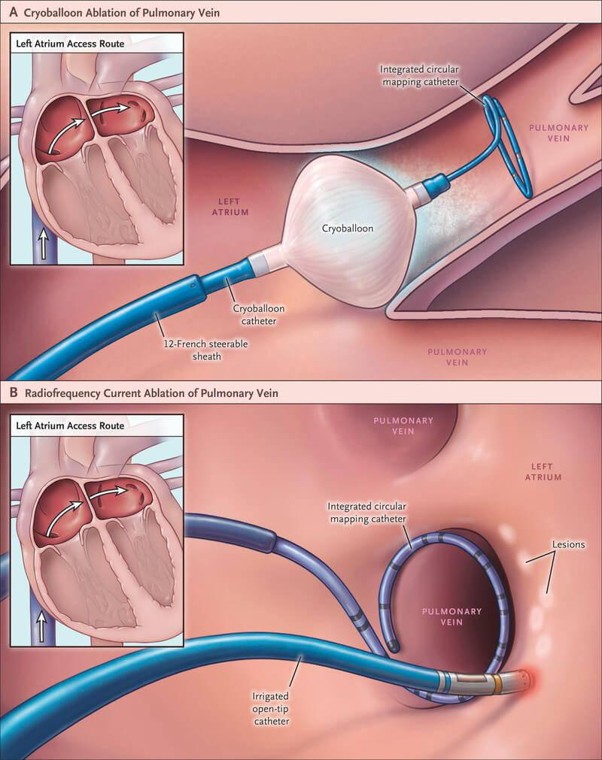
Ablation technology continues to evolve to improve the effectiveness and safety of procedures. The following are three energy-based approaches used in the ablation of atrial fibrillation.
1. Radiofrequency Ablation (RFA)
This method uses thermal energy to create lesions in the targeted heart tissue. RFA has long been used in ablation procedures to treat various heart rhythm disorders.
2. Cryoablation
This technique uses cold energy to produce an effect on target tissue. In cases of atrial fibrillation, cryoballoon technology can be used to isolate the areas that trigger rhythm disturbances.
3. Pulsed Field Ablation (PFA)
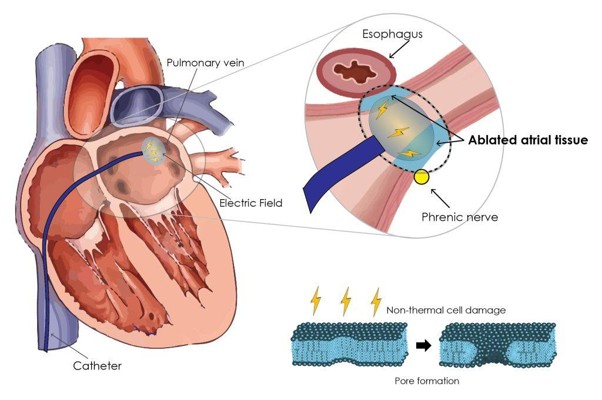
PFA utilizes high-voltage electrical pulses delivered over a very short duration to affect cells within the targeted cardiac tissue. This approach is designed to be more selective toward cardiac tissue compared to thermal methods.
What are the advantages of Pulsed Field Ablation?
Pulsed Field Ablation represents a technological advancement in the treatment of atrial fibrillation because it employs a non-thermal mechanism—distinct from the thermal energy used in RFA or the cold energy used in cryoablation.
PFA offers effectiveness comparable to thermal ablation, with the potential for shorter procedure times in certain conditions and when using specific systems. Nevertheless, the outcome of the procedure remains influenced by the patient's condition, the characteristics of the rhythm disorder, the technology employed, and the experience of the medical team. PFA is not risk-free; the choice of ablation method must be based on clinical indications and the physician's professional judgment.
Can Ablation Replace Blood-Thinning Medication?
Ablation aims to manage heart rhythm disorders, whereas anticoagulants (blood-thinning medications) are used to reduce the risk of blood clot formation. The two serve different purposes.
Therefore, the success of an ablation procedure does not automatically mean that a patient can stop taking blood-thinning medication. The decision to continue or discontinue anticoagulants must be based on an evaluation of stroke risk, the patient’s clinical condition, and established medical guidelines—rather than solely on the presence or absence of atrial fibrillation symptoms following the procedure.
The Importance of Early Intervention
Atrial fibrillation is a condition that requires a comprehensive approach. Beyond managing symptoms, treatment must address the risk of stroke, the potential for heart failure, modifiable risk factors, and the impact of the condition on daily activities.
Clinical evidence also suggests that a rhythm-control strategy—initiated early in appropriate patients—can offer benefits regarding specific cardiovascular outcomes. Nevertheless, the choice of therapy must always be tailored to the individual characteristics and condition of each patient.
Do not wait for your symptoms to worsen before seeking a medical evaluation. If you experience recurring heart palpitations, an irregular heartbeat, easy fatigability, or unexplained shortness of breath, please consult a physician.
RS Premier Bintaro offers the services of cardiologists—including specialists in electrophysiology and interventional cardiology—to help evaluate heart rhythm disorders and determine the most suitable treatment options for each patient’s needs.
Through an accurate diagnosis, the management of risk factors, and the selection of appropriate therapy, patients with atrial fibrillation can receive targeted care to safeguard their heart health and quality of life.
Contact us
For information and make an appointment

dr. Beny Hartono, Sp.JP, Subsp. KI (K), FIHA, FAPSC
Jantung View Schedule| Loading data... |
|---|