+62 817-4929-054


Treat Spinal Issues with Greater Precision Using Robotic Navigation
02 October 2026
3 min read


By: dr. Asrafi Rizki Gatam, Sp.OT (K-Spine)
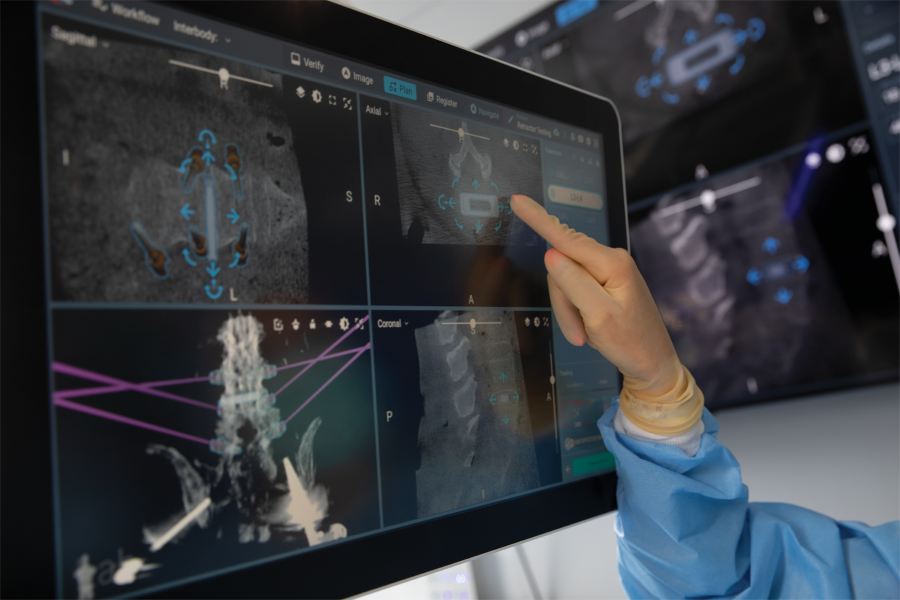
Advancements in medical technology have transformed the management of spinal conditions. From conventional procedures to minimally invasive spine surgery, robotic navigation technology now enables doctors to perform interventions with ever-increasing precision.
The spine is a vital part of the body with a complex structure. It comprises not only vertebrae but also joints, discs, ligaments, and neural structures such as the spinal cord and nerve roots. Consequently, addressing spinal issues requires accurate diagnosis, precise planning, and appropriate intervention.
A wide range of conditions can affect the spine, including degenerative diseases, deformities, injuries and trauma, spondylolisthesis, infections, and tumors, as well as cases requiring revision surgery.
Recognizing Spinal Issues
As we age, changes in the spine can lead to various complaints. In the early stages, a person might experience intermittent back pain or acute back pain. These symptoms may also be accompanied by radicular pain—pain that radiates along the path of a nerve.
If the condition persists, symptoms can evolve into chronic back pain, which may involve a combination of localized back pain and radiating pain. While back pain is quite common, persistent or recurring symptoms should not be ignored. A medical examination is necessary to identify the underlying cause and determine the appropriate treatment.
Advancements in Spinal Issue Treatment
Treatments for spinal issues continue to evolve. While conventional surgery was previously a standard approach, minimally invasive spine surgery techniques have since been developed.
Simply put, minimally invasive spine surgery is an approach that aims to treat issues while causing minimal disruption to the tissues surrounding the treatment area. The core concept is to leave "the smallest footprint."
This approach also helps minimize tissue injury, facilitates faster recovery, and improves the accuracy of implant placement. However, the more complex the spinal condition being treated, the more critical the level of accuracy becomes at every stage of the procedure.
Why Is Precision Important in Spinal Surgery?
In spinal surgery, preparation extends beyond the procedure itself. Surgeons must engage in pre-operative planning—utilizing specialized software—and rely on intraoperative guidance during the actual operation.
This is particularly crucial for spinal conditions involving complex anatomy.
Pedicle screw placement serves as a prime example. In spines with deformities, the size and shape of the pedicles can vary significantly, with some being notably small or having complex configurations. Consequently, precise implant placement is essential to ensure an optimal position.
How Does Robotic Navigation Help?
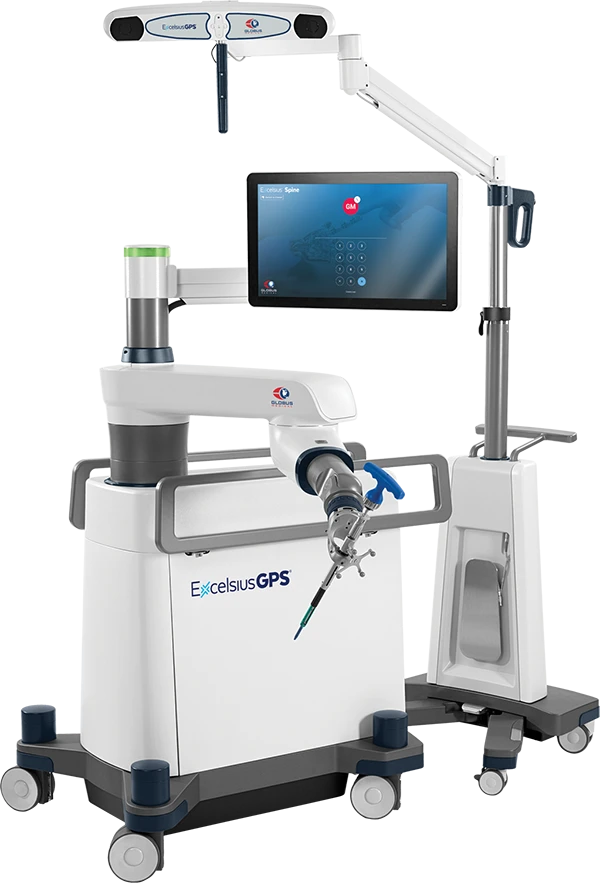
To meet this need for precision, technological advancements have introduced robotic navigation to spinal surgery.
One such technology currently available at RS Premier Bintaro is the Globus Excelsius GPS. This technology functions as part of a navigation system to assist surgeons during spinal procedures.
Robotic technology helps mitigate factors that can affect procedural consistency—such as fatigue and stress—while simultaneously enhancing accuracy and supporting patient safety. It is also effective for managing cases with complex spinal anatomy, including procedures for scoliosis.
Robots Are Not a Substitute for Doctors
Even with the use of robotic technology, medical decisions remain in the hands of the doctor.
Robots do not replace a doctor's expertise and experience. The technology serves as an aid to support doctors in performing procedures with greater precision and accuracy.
In other words, technology and medical expertise complement each other. Doctors continue to determine diagnoses, indications for treatment, procedural choices, and medical decisions based on each patient's specific condition.
What Are the Benefits for Patients?
Technological advancements in spinal surgery ultimately aim to benefit patients.
Technology can help improve the accuracy of procedures and implant placement, while minimally invasive approaches are designed to minimize tissue disruption and support recovery.
From the patient's perspective, these advancements are expected to support:
- More precise treatment
- Minimal tissue injury with the minimally invasive approach
- Faster recovery
- Reduced pain
- Shorter hospital stay
However, the benefits and treatment options may vary for each patient, depending on their specific condition and diagnosis.
Not All Back Pain Requires Surgery.
It is important to understand that not all spinal issues require surgery.
Treatment is tailored to the cause, condition, and individual needs of each patient. Therefore, if you experience back pain that is recurrent, persistent, increasingly bothersome, or accompanied by radiating pain, the first step is to seek a medical examination and evaluation. A doctor can help determine the cause of the issue and identify the most appropriate treatment options.
Do Not Ignore Spinal Issues
Back pain may seem like a minor issue, but if it recurs frequently or interferes with daily activities, it should not be ignored.
If you are experiencing back or spinal issues, consult a doctor for a proper evaluation. The clearer the cause of the problem, the more precisely a treatment plan can be devised.
At RS Premier Bintaro, spinal care services are supported by specialist physicians and advanced medical technology—including robotic navigation systems—as part of a commitment to providing modern care tailored to patient needs.
Technology enhances precision for doctors; however, the best outcomes ultimately stem from an accurate diagnosis and treatment that aligns with each patient's specific condition.
Contact Us
For information and make an appointment

dr. Asrafi Rizki Gatam, Sp.OT (K) Spine
Orthopedi & Traumatologi View Schedule| Loading data... |
|---|